
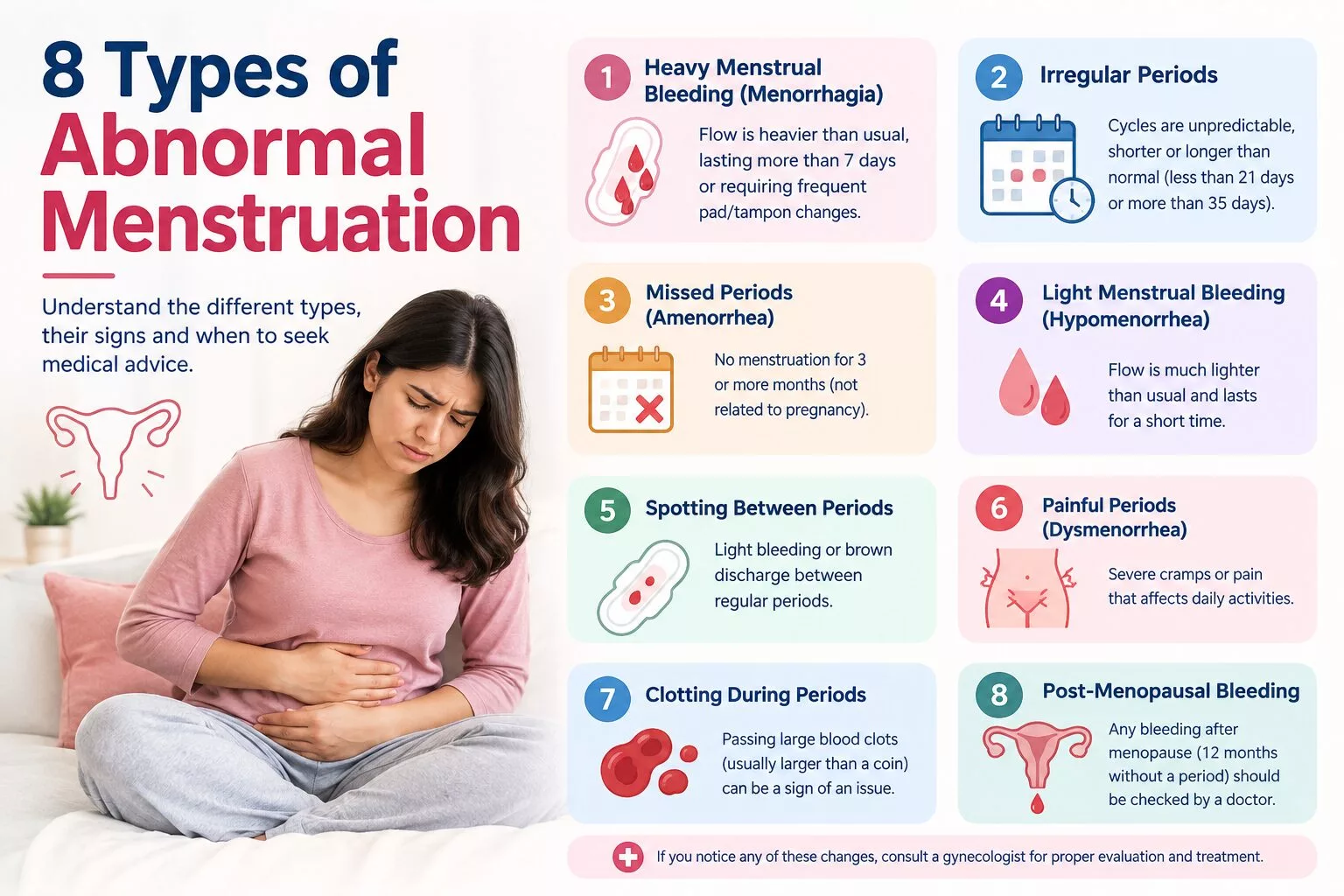
A normal menstrual cycle usually lasts between 21 and 35 days, with bleeding lasting 3 to 7 days. But for many women, periods don’t follow this pattern.
Irregular periods are one of the most common reproductive health concerns. They can range from mild timing shifts to serious menstrual disorders that affect daily life.
Understanding the 8 types of abnormal menstruation helps you recognize when your cycle needs medical attention. This guide breaks down each type, its causes, and treatment options in simple language.
Abnormal menstruation refers to any change in the frequency, duration, flow, or regularity of your period. It falls under the broader category of menstrual disorders. Menstruation problems can show up as periods that come too often, too rarely, too heavily, or not at all. Some women also experience unusual pain or bleeding between cycles.
Recognizing the specific pattern is the first step toward getting the right irregular menstruation treatment. Below, we cover the 8 types of abnormal menstruation you should know about in detail.
Menorrhagia is characterized by unusually heavy or prolonged bleeding during periods. Some women soak through a pad or tampon every hour for several consecutive hours.
This type of abnormal menstruation can lead to fatigue and iron-deficiency anemia if left untreated. Common triggers include uterine fibroids, polyps, and hormonal imbalance.
Oligomenorrhea means periods occur less often than usual, often with cycles longer than 35 days. This is one of the frequent reasons for irregular periods among young women.
It is commonly linked to polycystic ovary syndrome (PCOS), thyroid dysfunction, or excessive exercise. Stress and sudden weight loss can also delay ovulation.
Amenorrhea is the complete absence of menstruation for three or more consecutive cycles in someone who previously had periods. It may also refer to periods that never started by age 15.
Pregnancy, breastfeeding, and menopause are natural causes. However, it can also signal underlying menstrual disorders like premature ovarian failure or severe hormonal imbalance.
Polymenorrhea occurs when menstrual cycles are shorter than 21 days, causing periods to arrive more frequently than normal. Women may feel like they are constantly menstruating.
This condition is often tied to anovulation, where ovulation does not occur consistently. It is one of the lesser-known causes of irregular periods that many women overlook.
Metrorrhagia refers to bleeding or spotting that happens between expected periods. It disrupts the predictable rhythm of the menstrual cycle.
Possible causes include hormonal contraceptives, cervical infections, uterine polyps, or, in some cases, more serious conditions. Any unexplained bleeding between cycles deserves medical evaluation.
Dysmenorrhea is marked by severe cramping and pelvic pain during menstruation. While mild discomfort is common, intense pain that disrupts daily activities is not.
Primary dysmenorrhea relates to natural uterine contractions, while secondary dysmenorrhea often stems from conditions like endometriosis or adenomyosis. This is a widely reported menstruation problem worldwide.
Hypomenorrhea involves unusually light menstrual flow that lasts a shorter time than normal. Some women notice only spotting instead of a full flow.
Hormonal birth control, thyroid issues, and extreme weight loss are frequent reasons for irregular periods presenting this way. Uterine scarring from past surgeries can also play a role.
PMDD is a severe form of premenstrual syndrome that causes intense mood swings, irritability, anxiety, or depression before menstruation begins. It is far more disruptive than typical PMS.
Although not a bleeding irregularity itself, PMDD is classified among menstrual disorders because it directly affects the menstrual cycle experience and quality of life.
There are several common causes of irregular periods that affect women at different life stages. Understanding them helps identify the right treatment path.
● Hormonal imbalance: Fluctuations in estrogen and progesterone are among the leading reasons for irregular periods.
● PCOS: Polycystic ovary syndrome disrupts ovulation and is a major cause of irregular menstruation.
● Thyroid disorders: An overactive or underactive thyroid can throw off cycle timing.
● Stress: Chronic stress affects the hypothalamus, which regulates the menstrual cycle.
● Weight changes: Rapid weight gain or loss can trigger irregular periods.
● Perimenopause: Approaching menopause naturally causes menstruation problems as hormone levels shift.
● Uterine growths: Fibroids and polyps often cause heavy or irregular bleeding.
● Medications: Certain birth control methods and other drugs can alter cycle patterns.
Identifying the exact cause of irregular menstruation is essential before starting any treatment plan.
Treatment depends entirely on the underlying cause of the abnormal menstruation. There is no single fix that works for every menstrual disorder.
Lifestyle adjustments often help mild cases. Maintaining a healthy weight, managing stress, and regular exercise can restore cycle regularity over time.
Hormonal therapy, such as birth control pills or hormone-regulating medication, is a common irregular periods treatment for PCOS-related and hormonal-imbalance cases.
Medical procedures may be recommended for structural issues like fibroids or polyps. In some situations, minor surgical intervention resolves persistent heavy bleeding.
Nutritional support, including iron supplements, is often advised for women experiencing menorrhagia to prevent anemia from ongoing blood loss.
An effective irregular menstruation treatment plan usually combines more than one approach, tailored to the specific type of abnormal menstruation involved.
Not every irregular period requires medical attention, but some signs should never be ignored. See a gynecologist if you experience:
● Bleeding that soaks through protection every hour for several hours
● Periods lasting longer than seven days
● No period for three or more months (without pregnancy)
● Severe pain that interferes with daily life
● Bleeding between periods or after menopause
● Sudden, unexplained changes to your usual cycle
Early evaluation of menstrual disorders leads to faster diagnosis and more effective treatment.
