
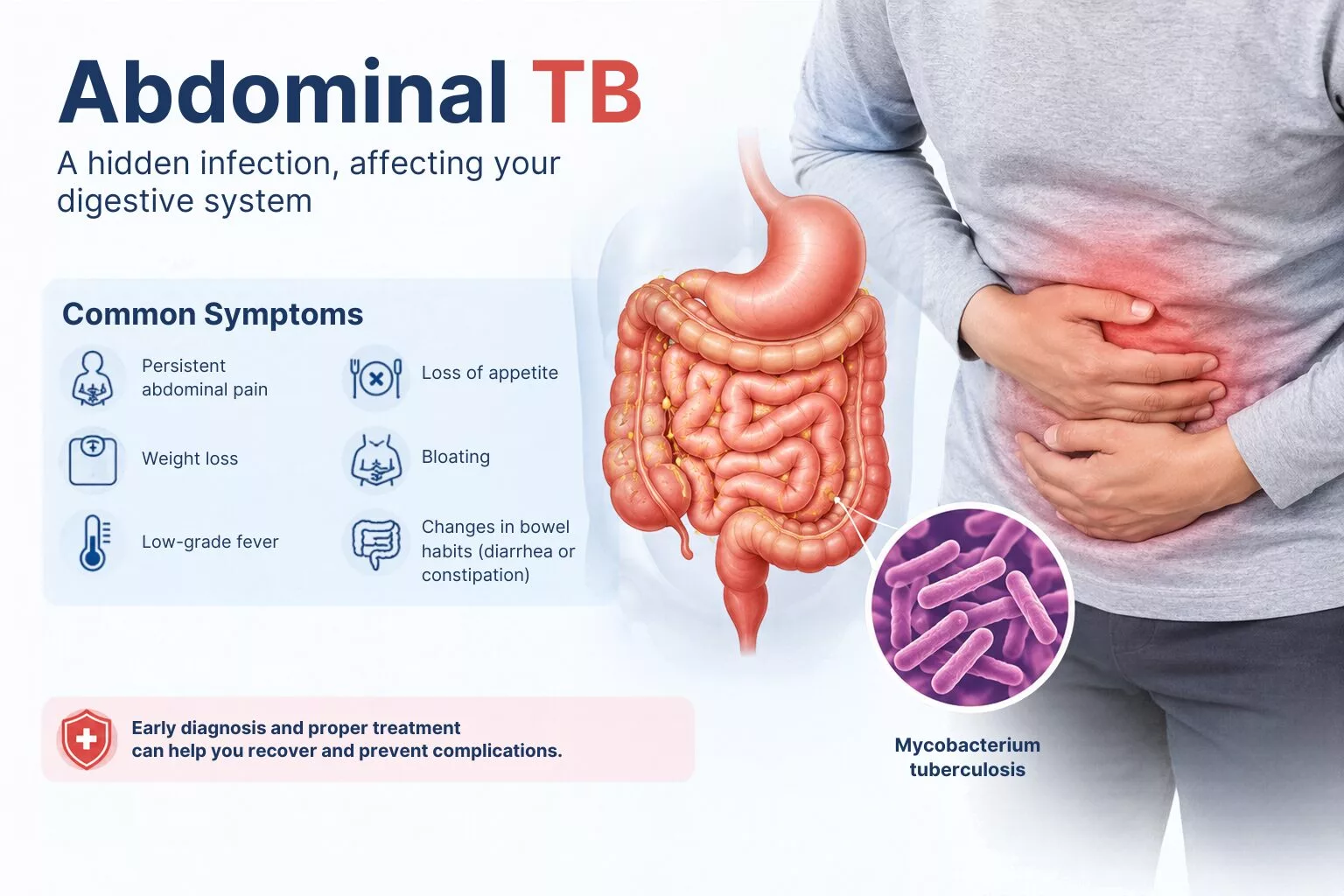
Abdominal TB symptoms are easy to miss. They often look like common stomach problems.
Abdominal tuberculosis is a TB infection inside the belly. It can affect the intestines, the belly lining, the lymph nodes, and organs like the liver.
Many people ignore early abdominal TB symptoms for months. They think it is gastritis or acidity. This delay can cause serious harm.
Abdominal tuberculosis is caused by Mycobacterium tuberculosis. These are the same germs that cause lung TB.
The germs can reach the belly in three ways:
Sometimes old, sleeping germs wake up years later.
This form is common in countries with high TB rates, such as India. It can also occur without any lung disease. A normal chest X-ray does not rule it out.
That is why knowing abdominal TB symptoms matters so much.
Pain is the most common of all abdominal TB symptoms. It is usually dull and crampy. You may feel it near the navel or in the lower right side.
Pain lasting more than two to three weeks needs a check-up.
A mild fever in the evening is a classic sign. Night sweats and tiredness often follow.
Together, these point to a long-term infection.
Losing weight without trying is a strong warning. You may feel full very quickly. You may also lose interest in food.
Diarrhoea, constipation, or both may occur. Some people see blood or mucus in the stool.
Bowel changes lasting for weeks should never be ignored.
Many people search for stomach TB symptoms when they feel upper belly discomfort. Stomach tuberculosis symptoms include nausea, vomiting, bloating, and ulcer-like pain.
True stomach involvement is rare. Most people have intestinal or peritoneal disease instead.
Doctors often mistake these signs for gastritis or ulcers. If antacids do not help, ask about TB.
Stomach TB symptoms along with fever and weight loss need a proper check.
The pattern of abdominal TB symptoms depends on the area affected. There are four main types.
Intestinal Type
Intestinal tuberculosis often affects the place where the small and large intestines meet. Signs include lower right belly pain, diarrhoea, constipation, and a lump.
The bowel may narrow and cause a blockage. Doctors often confuse it with Crohn’s disease.
Peritoneal Type
This type affects the belly lining. Signs include a swollen belly from fluid, mild pain, fever, and weight loss.
Lymph Node Type
Swollen glands inside the belly can cause vague pain, fever, and poor appetite.
Organ Type
TB in the liver, spleen, or pancreas can cause upper belly pain. The liver may also become enlarged.
Without treatment, abdominal TB symptoms can turn severe. Go to a hospital if you have:
These signs may mean a blockage, a hole in the bowel, or bleeding. They are emergencies. Surgery may be needed.
Anyone can develop abdominal TB symptoms. Some people face a higher risk:
If you fit one of these groups, do not wait when symptoms appear.
Early treatment prevents damage. When abdominal TB symptoms are caught early, medicines usually work well and surgery is rarely needed.
Late diagnosis is riskier. The bowel can scar and narrow. Fluid can build up in the belly. Weight loss and weakness can become severe.
In many patients, the delay is the real problem. Months pass with the wrong treatment for acidity or IBS. Noticing abdominal TB symptoms early can save you that time.
No single test proves the disease. Abdominal tuberculosis diagnosis needs history, examination, imaging, and lab tests together.
Imaging and the Fleischner Sign
Ultrasound and CT scans usually come first. They may show thick bowel walls, swollen glands, and fluid in the belly. Barium tests can show a narrowed bowel.
One key clue is the fleischner sign TB doctors look for. It is a wide, thickened ileocecal valve with a narrow end of the small intestine.
It is not present in every patient. It is also not unique to TB. But it raises suspicion.
Lab Tests and Biopsy
Blood tests may show anaemia and high inflammation. Fluid tests, including ADA, help in peritoneal TB.
A colonoscopy lets doctors see ulcers and take tissue samples. A biopsy that shows granulomas or TB germs confirms the disease. GeneXpert can add support.
A full abdominal tuberculosis diagnosis may take days or weeks. Follow-up is important.
Your doctor will ask about your symptoms, weight, fever, and any TB contact. They will press on your belly to check for lumps, fluid, or tenderness.
Then they may order blood tests, a chest X-ray, and a scan. Bring your old reports with you.
Be honest about all abdominal TB symptoms, even small ones like night sweats. Small details help doctors choose the right test first.
Intestinal TB and Crohn’s disease look very similar. Both cause pain, diarrhoea, weight loss, and bowel ulcers.
The treatment is very different. Steroid-based Crohn’s treatment can make TB worse.
This is why doctors test carefully for TB before starting other treatment. If your abdominal TB symptoms did not improve with earlier treatment, ask your doctor about this.
Abdominal TB is usually not spread from person to person. The germs stay mostly inside the belly, not in the air.
Someone with only abdominal TB symptoms rarely infects others. However, many patients also have lung TB, and lung TB spreads through coughing.
This is why doctors check the chest too. Close family members may also need screening.
Abdominal TB is curable. Most patients take anti-TB medicines for about six months. Some need longer.
Finish the full course, even after you feel better. Stopping early can cause relapse or drug-resistant TB.
Surgery is only needed for complications. Healthy food, rest, and regular follow-up help recovery.
Good habits help your body heal and lower the risk of side effects.
Keep going even when your abdominal TB symptoms improve.
See a doctor if you have belly pain, fever, or weight loss lasting over two to three weeks.
Go sooner if you notice blood in the stool, a swelling belly, or repeated vomiting.
Tell your doctor about any past TB, contact with a TB patient, or weak immunity. Early care for abdominal TB symptoms makes treatment simpler and safer.
