Caring for You, Every Step of the Way - Helpline: (+91) 8882036990, 0120-3633454
anemia symptoms

Anemia Symptoms in Eyes: Signs You Should Not Ignore

Home / Blog / Anemia Symptoms in Eyes: Signs You Should Not Ignore

Your eyes can reveal a lot about your overall health, sometimes even before other symptoms show up. One condition that often shows early warning signs in the eyes is anemia. Learning to spot anemia symptoms in the eyes can help you catch low hemoglobin levels early and get the right care before things get worse. This guide breaks down the causes, signs, and remedies in simple, easy-to-understand language.

What Is Anemia?

Anemia is a condition where your body doesn’t have enough healthy red blood cells to carry oxygen to your tissues. This can leave you feeling tired, weak, and short of breath.

Anemia is quite common and can affect people of all ages. It ranges from mild cases that go unnoticed to more serious forms that need medical treatment. Since red blood cells carry oxygen throughout the body, including to the eyes, changes in blood health often show up as visible signs in the eye area.

Why Do Eyes Show Anemia Symptoms?

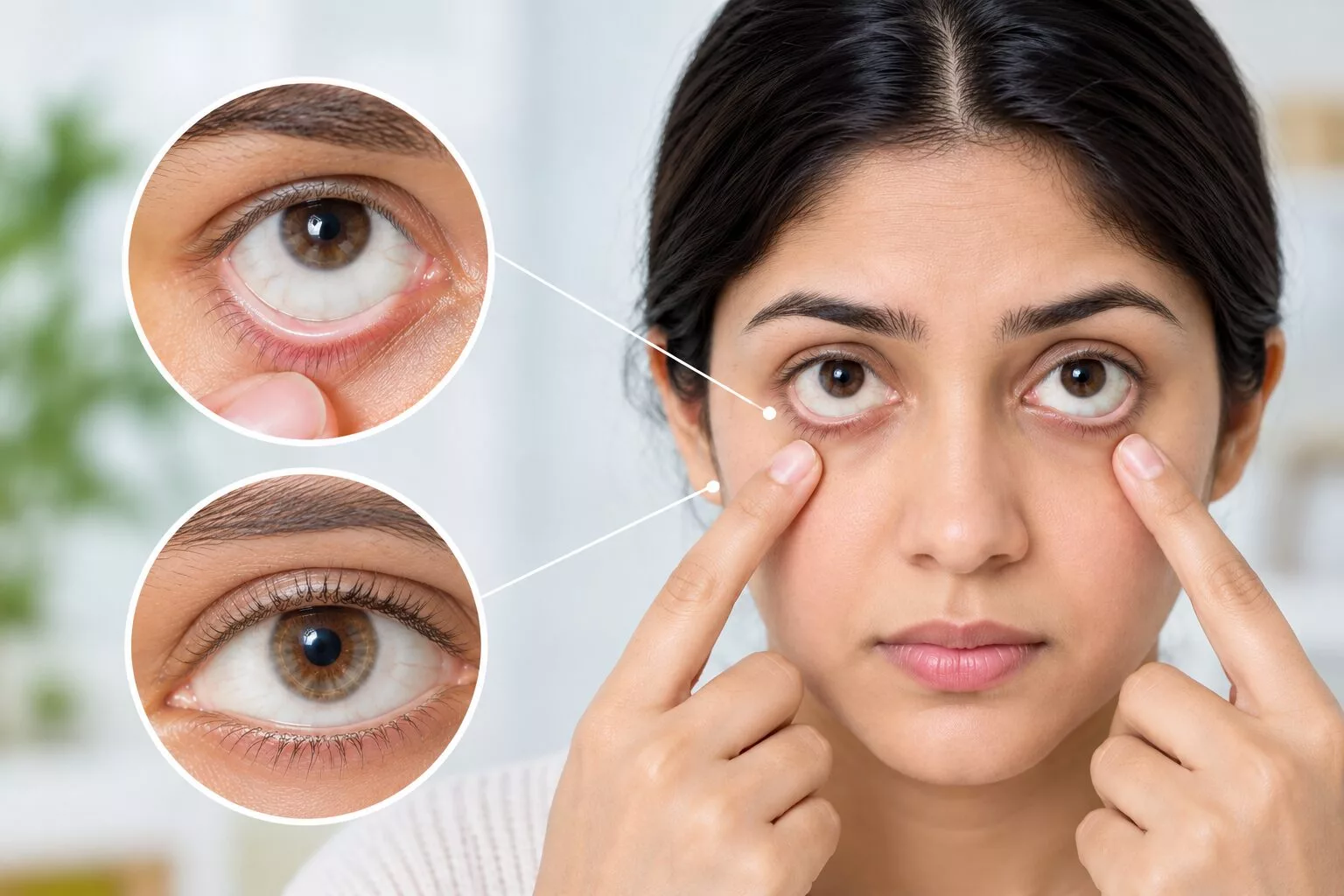
The eyes have a rich network of small blood vessels, and the inner eyelid in particular is lined with tissue that shows blood color clearly. When hemoglobin levels drop, this area loses its healthy pink or red color.

This is why doctors often check the inner eyelid as a simple first step when looking for low hemoglobin symptoms. It’s a quick, visible clue that something may be off with your blood health.

Common Anemia Symptoms in Eyes

Recognizing anemia symptoms in eyes early can make a real difference in getting timely treatment. Watch out for these signs:

  • Pale inner eyelids – One of the clearest anemic eyes signs; the inner eyelid appears pale pink or white instead of a healthy red.
  • Pale or yellowish white of the eyes – In some cases, the sclera (white part of the eye) may look unusually pale or slightly yellow.
  • Dark circles under the eyes – Persistent dark circles can be linked to poor blood oxygen levels.
  • Blurred or dimmed vision – Reduced oxygen supply to the eyes can sometimes cause mild vision changes.
  • Dry or irritated eyes – Some people with anemia also notice increased dryness or discomfort in their eyes.

If you notice several of these anemia signs and symptoms together, it’s a good idea to get your hemoglobin levels checked.

Other Common Anemia Symptoms Beyond the Eyes

While eye changes are a helpful clue, anemia usually affects the whole body. Common anemia symptoms include:

  • Constant fatigue and low energy
  • Shortness of breath, especially during activity
  • Pale skin
  • Dizziness or lightheadedness
  • Rapid or irregular heartbeat
  • Cold hands and feet
  • Headaches

These symptoms often develop gradually, so many people don’t realize they have anemia until it becomes more noticeable.

What Causes Anemia?

Understanding anemia causes helps in choosing the right treatment approach. Some of the most common causes include:

  • Iron deficiency – The most frequent cause, often linked to poor diet or blood loss.
  • Vitamin B12 or folate deficiency – These nutrients are essential for healthy red blood cell production.
  • Chronic diseases – Conditions like kidney disease can interfere with red blood cell production.
  • Heavy menstrual bleeding – A common reason for low hemoglobin symptoms in women.
  • Pregnancy – Increased blood volume during pregnancy can lead to temporary anemia.
  • Genetic conditions – Some inherited disorders affect red blood cell shape or function.

Iron Deficiency Symptoms and Their Link to Anemia

Iron deficiency is one of the leading reasons for low hemoglobin worldwide. When your body doesn’t get enough iron, it can’t produce enough healthy red blood cells.

Common iron deficiency symptoms include:

  • Unusual tiredness and weakness
  • Pale skin and pale inner eyelids
  • Brittle nails
  • Unusual cravings for non-food items like ice or chalk
  • Frequent headaches

Since iron deficiency is so common, it’s often the first thing doctors check when investigating anemia disease.

Understanding Hypochromic Anemia

Hypochromic anemia is a specific type where red blood cells appear paler than normal under a microscope due to lower hemoglobin content. This type is usually linked to iron deficiency, though other causes are possible too.

People with hypochromic anemia often show more noticeable pale signs in the eyes and skin, making early screening especially useful for catching this type early.

How Is Anemia Diagnosed?

If you notice anemia symptoms in eyes or other parts of the body, a simple blood test can confirm the diagnosis. Common diagnostic steps include:

  • Complete blood count (CBC) – Measures red blood cell levels and hemoglobin.
  • Iron studies – Checks iron levels, ferritin, and related markers.
  • Vitamin B12 and folate tests – Rules out deficiency-related anemia.
  • Physical examination – Includes checking the eyes, skin, and nails for visible signs.

Getting diagnosed early makes treatment simpler and more effective.

Remedies and Treatment for Anemia

Treatment usually depends on the underlying cause, but many cases improve with the following approaches:

  • Iron-rich foods – Include spinach, red meat, beans, and fortified cereals in your diet.
  • Vitamin C – Helps improve iron absorption when eaten alongside iron-rich foods.
  • Supplements – Iron, B12, or folate supplements may be prescribed based on test results.
  • Treating the root cause – Managing conditions like heavy bleeding or chronic disease.
  • Regular follow-ups – Repeat blood tests help track improvement over time.

Mild anemia often improves within a few weeks of proper treatment, while more severe cases may take longer.

When Should You See a Doctor?

While mild fatigue is common, certain signs call for prompt medical attention. See a doctor if you notice:

  • Persistent pale inner eyelids or anemic eyes
  • Ongoing dizziness or fainting spells
  • Rapid heartbeat along with fatigue
  • Shortness of breath during normal activities
  • Unexplained weight loss along with other anemia symptoms

Early diagnosis and treatment can prevent complications and help you feel back to normal faster.

Wrapping Up: Why Anemia Symptoms in Eyes Matter

Your eyes can act as an early warning sign for underlying health issues, and anemia is a good example of this. Noticing anemia symptoms in eyes, such as pale inner eyelids or dull-looking sclera, can prompt earlier testing and treatment. Along with eye changes, watching for other anemia signs and symptoms like fatigue, dizziness, and pale skin can help you catch low hemoglobin levels before they affect your daily life. If you suspect anemia, a simple blood test and a chat with your doctor can set you on the path to feeling better.

FAQs

What do anemic eyes look like?

Anemic eyes typically show pale inner eyelids and sometimes a paler or duller appearance in the white part of the eye, due to reduced hemoglobin in the blood.

Can low hemoglobin cause eye problems?

Yes, low hemoglobin symptoms can include mild vision changes, eye dryness, and paleness in the inner eyelid because of reduced oxygen supply to eye tissues.

Is pale inner eyelid always a sign of anemia?

It's one of the most common signs, but a doctor should confirm anemia through a blood test, since other conditions can also cause paleness.

How can I quickly check for anemia at home?

Gently pull down your lower eyelid and check its color; a pale pink or white color instead of a healthy red may suggest anemia, though a blood test is needed for confirmation.

What foods help fix low hemoglobin fast?

Iron-rich foods like spinach, lentils, red meat, and fortified cereals, combined with vitamin C for better absorption, can help raise hemoglobin levels over time.