
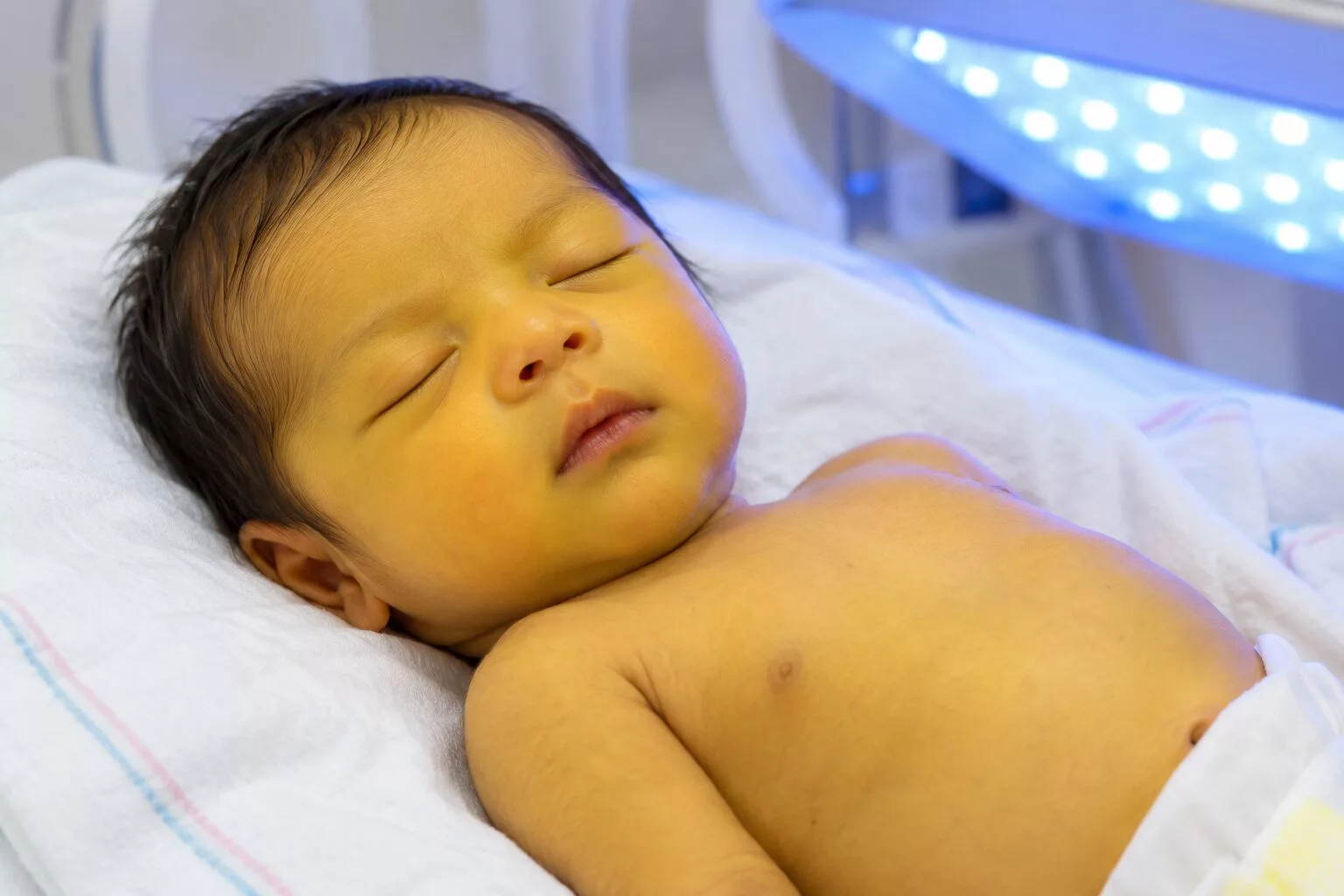
Seeing your newborn’s skin turn slightly yellow can feel scary. But in most cases, jaundice in newborns is a normal and temporary condition. It happens in nearly 60% of full-term babies and up to 80% of premature babies during the first week of life. The real question most parents ask is simple: how do I know my baby is getting better? This guide explains what jaundice is, why it happens, and most importantly, the clear recovery signs that show your baby is on the right track.
So, what is jaundice? Jaundice is a condition where the skin and the white part of the eyes turn yellow. This happens because of a build-up of a yellow substance called bilirubin in the blood. Bilirubin forms when old red blood cells break down. Normally, the liver removes it. But a newborn’s liver is still maturing, so it may not clear bilirubin fast enough at first.
Neonatal jaundice simply means jaundice that appears in a baby within the first few days after birth. It is one of the most common conditions seen in newborn care units around the world. Most cases are described as “physiological jaundice,” meaning they happen naturally as the baby’s liver adjusts to processing bilirubin outside the womb, and they resolve without any lasting effect on the baby’s health.
Several factors can lead to neonatal jaundice, including:
The most common symptoms of jaundice in newborn babies include:
If yellowing spreads to the arms, legs, or feet, it’s a sign bilirubin levels may be rising and should be checked by a doctor.
Doctors measure bilirubin in milligrams per deciliter (mg/dL). Here is a simple guide to normal bilirubin level in newborn babies:
Age of Baby | Typical Bilirubin Range |
Day 1 | Below 6 mg/dL |
Day 2–3 | 6–12 mg/dL (peak range) |
Day 4–7 | Should start dropping |
After 2 weeks | Usually below 1 mg/dL |
A dangerous level of bilirubin in newborns generally means levels above 20–25 mg/dL, though the exact number depends on the baby’s age in hours and birth weight. At very high levels, bilirubin can affect the brain, a rare but serious condition called kernicterus. This is why doctors routinely check jaundice levels in newborns before hospital discharge and during follow-up visits.
Most mild cases need no treatment and clear up within 1–2 weeks. However, if bilirubin levels are high, doctors may recommend:
Newborn jaundice treatment is usually simple and effective when started early, which is why regular pediatric checkups matter. Most babies respond well within a few days, and doctors typically re-check bilirubin levels 24 to 48 hours after starting treatment to confirm they are trending downward.
Once treatment starts or the baby’s liver matures, parents can look for clear signs their baby is healing. These signs typically appear gradually over several days.
1. Skin Color Fading
The yellow tint usually fades from the head downward — first from the face, then the chest, and finally the legs and feet. This top-to-bottom fading pattern is one of the most reliable recovery signs.
2. Better Feeding and Alertness
A recovering baby feeds more actively, wakes up easily for feeds, and appears more alert between sleep cycles.
3. Normal Stool and Urine Color
As bilirubin clears, stools often turn a more yellow or mustard color, and urine becomes lighter instead of dark yellow.
4. Steady Weight Gain
Healthy feeding during recovery usually shows up as steady weight gain, a good sign that digestion and bilirubin clearance are improving.
5. Falling Bilirubin Numbers
The most objective sign is a falling bilirubin level on follow-up blood tests, confirmed by the pediatrician.
Contact your pediatrician right away if you notice:
Newborn jaundice is common and, in most cases, resolves on its own with time and good feeding. Watching for the true recovery signs — fading skin color, better feeding, normal stool color, and falling bilirubin levels — can help parents feel reassured during this early stage of their baby’s life. When in doubt, a quick check with your pediatrician offers the best peace of mind.
