
Many people think heart defects are only found in babies. In fact, some are missed early in life and show up years later. One of these is patent ductus arteriosus in adults. It is a small blood vessel that should have closed after birth but stayed open. Some adults live with it for decades without knowing. Others slowly develop breathlessness, tiredness, or heart rhythm problems.
This guide explains what patent ductus arteriosus in adults is, how doctors find it, and how it is treated. It also covers the warning signs, the tests you may need, and the outlook after care. We use simple words so you can follow each step.
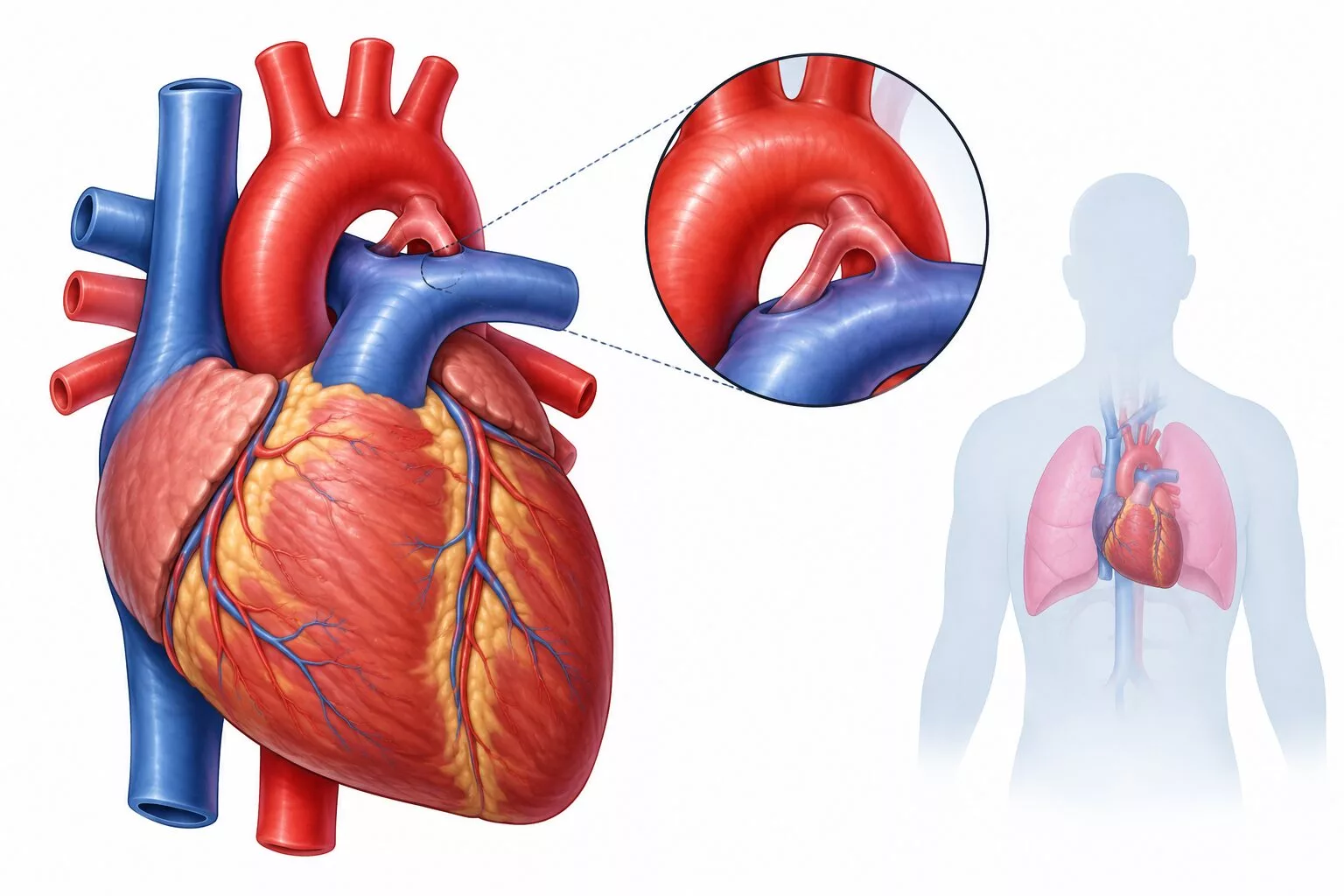
Before birth, a baby’s lungs are not working, so a short vessel called the ductus arteriosus links the aorta to the pulmonary artery and lets blood skip the lungs. After birth, it normally shuts within a few days. When it stays open, doctors call it a patent ductus arteriosus. Patent ductus arteriosus in adults is rare, found in about 1 in 2,000 full-term births, and it affects women more often than men.
You may see the pda medical abbreviation in reports and test results. In heart care, PDA stands for patent ductus arteriosus. Note that the same letters can mean other things in medicine, such as the posterior descending artery, so the context matters. Here, we use PDA for the heart vessel.
Yes. PDA heart disease is a type of congenital heart disease, which means it is present from birth. Some people call it a “hole” between two vessels, but it is really a tube that stayed open.
To understand the symptoms, it helps to know the patent ductus arteriosus pathophysiology. In an adult, pressure in the aorta is much higher than pressure in the pulmonary artery. So when the duct stays open, blood flows from the aorta into the lung artery. This is called a left-to-right shunt.
The extra blood then flows through the lungs and returns to the left side of the heart. Over time, the left heart has to handle more blood than it should. It stretches and works harder. A large flow can also raise pressure in the lung vessels. This is called pulmonary hypertension.
If the pressure in the lungs becomes very high, the flow can reverse. Blood then moves from the lung artery to the aorta and carries less oxygen. This serious stage is called Eisenmenger syndrome.
The symptoms of patent ductus arteriosus in adults depend on the size of the opening. A tiny duct may never cause trouble, while a wide one can strain the heart.
The most famous sign is the patent ductus arteriosus murmur. A doctor hears it with a stethoscope, usually below the left collarbone. It is a continuous sound that goes on through the heartbeat. Many doctors call it a “machinery” murmur because it sounds like a running engine.
In some adults with high lung pressure, this murmur becomes soft or disappears. That is why doctors never rely on sound alone.
Diagnosis of patent ductus arteriosus in adults usually starts with a talk and a physical exam. The doctor asks about breathing, energy, past heart problems, and family history. Then they listen to the heart and check the pulse. A strong, bounding pulse can be a clue.
Several tests then confirm the answer.
Echocardiogram for Patent Ductus Arteriosus in Adults
An echocardiogram is the main test. It uses sound waves to make a moving picture of the heart. It shows the duct, its size, and the direction of blood flow. It also shows whether the left heart is enlarged and whether lung pressure is high. The test is painless and safe.
Other Tests
Treatment for patent ductus arteriosus in adults depends on the size of the duct, your symptoms, and your lung pressure. In babies, doctors can use medicines to close the vessel. These medicines do not work well in grown-ups, so other options are used.
Watchful Waiting
A very small duct with no symptoms and no heart strain may need only regular check-ups. Your doctor will repeat scans from time to time.
PDA Device Closure
For most adults who need treatment, PDA device closure is the first choice. It is done through a vein in the leg, so no big cut is needed. The doctor guides a thin tube up to the duct and places a small plug, often called a duct occluder. The plug blocks the flow. Most people go home within a day and return to normal life in a short time. Doctors trust this method for patent ductus arteriosus in adults because the success rate is high.
Surgery for Patent Ductus Arteriosus in Adults
Surgery is used when the duct is too large, too short, or too hard for a device. It is also used when the vessel wall is calcified or has formed a bulge called an aneurysm. The surgeon ties off or divides the duct. This is a bigger operation than the device method, and it needs more recovery time.
When Closure Is Not Safe
If a person has severe pulmonary hypertension with reversed flow (Eisenmenger syndrome), closing the duct can be harmful. In this case, care focuses on medicines that lower lung pressure and protect the heart. Specialists in adult congenital heart disease make this decision.
Leaving patent ductus arteriosus in adults untreated over many years can cause:
Early diagnosis and treatment lower these risks.
After closure, most people feel better and enjoy normal activity. Life with patent ductus arteriosus in adults is much easier once the duct is treated. Still, follow-up is important. Here are some simple tips.
This article is for general education and is not medical advice. Please see a doctor for any heart concern.
