
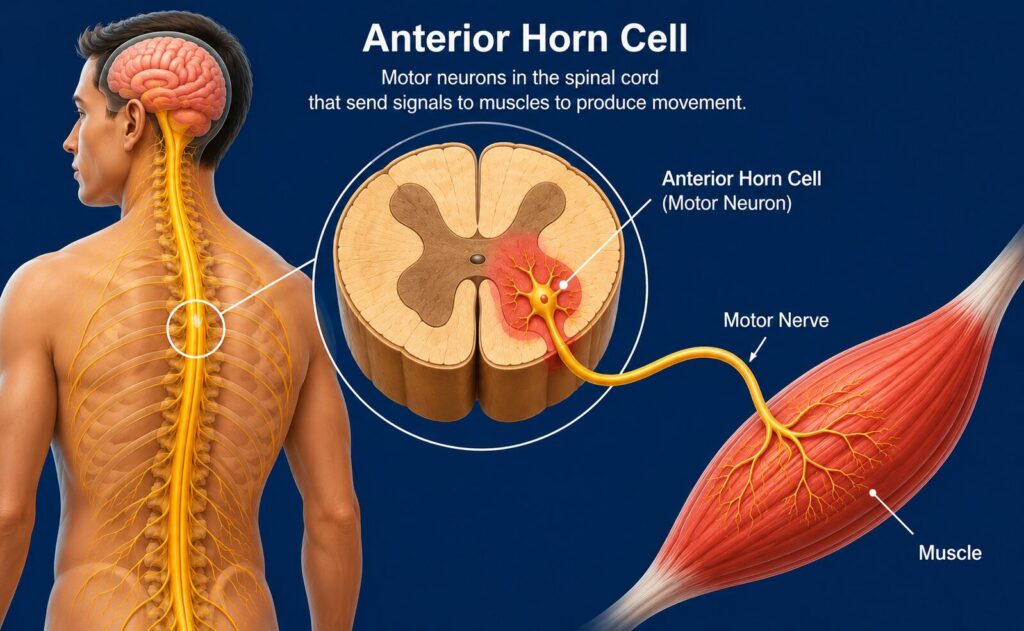
The nervous system controls almost every movement in the human body. When nerve cells become damaged, muscle weakness and movement problems can begin slowly and worsen over time. One such serious neurological condition is anterior horn cell disease. This condition affects the motor nerve cells located in the anterior horn of spinal cord, leading to muscle weakness, shrinking of muscles, and difficulty performing daily activities.
Many people ignore the early warning signs because symptoms often begin gradually. However, identifying anterior horn cell disease symptoms early can help improve treatment outcomes and slow disease progression. In this blog, we will explain the causes, symptoms, diagnosis, risk factors, treatment options, and preventive care related to anterior horn cell disease in simple patient-friendly language.
Anterior horn cell disease is a neurological disorder that damages the motor neurons located in the anterior horn cells of spinal cord. These nerve cells are responsible for sending signals from the brain to muscles for movement.
When these cells stop working properly, muscles become weak and lose their strength. Over time, muscle wasting and movement difficulties may develop. Conditions such as spinal muscular atrophy and amyotrophic lateral sclerosis are examples of diseases involving the anterior horn cell.
The term anterior horn refers to the front section of the spinal cord where motor neurons are present. These neurons play a critical role in controlling voluntary muscle movement.
The spinal cord contains several important nerve structures. The anterior horn of spinal cord contains motor nerve cells that help muscles move properly.
These motor neurons send electrical signals from the brain to different muscles in the body. Damage to these nerve cells interrupts communication between the brain and muscles.
It is important to understand that terms like anterior horn lateral meniscus, anterior horn of medial meniscus, and anterior horn of the lateral ventricle belong to different anatomical structures and are not directly related to anterior horn cell disease. However, these terms are commonly searched online and may confuse patients.
Recognizing anterior horn cell disease symptoms early is important for timely medical care.
Muscle Weakness
Muscle weakness is usually the first symptom of anterior horn cell disease. Patients may notice weakness in the arms, legs, shoulders, or hands.
Simple activities like climbing stairs, lifting objects, or walking may become difficult.
Muscle Twitching
Small involuntary muscle movements, known as fasciculations, are common in people with anterior horn cell disease symptoms.
These muscle twitches may appear in the arms, legs, tongue, or shoulders.
Muscle Wasting
As the disease progresses, muscles begin shrinking due to nerve damage.
Muscle wasting often affects the hands and legs first.
Difficulty Walking
Weak muscles can affect balance and coordination.
Many patients experience frequent falls, difficulty standing, or problems while walking.
Fatigue and Weak Grip Strength
Patients may feel tired even after minimal physical activity.
Weak hand grip is another common sign of anterior horn cell disease.
Difficulty Speaking or Swallowing
In advanced cases, the muscles controlling speech and swallowing may become weak.
This can lead to slurred speech and swallowing difficulties.
The exact cause of anterior horn cell disease may vary depending on the underlying neurological condition.
Genetic Disorders
Certain inherited conditions can damage the anterior horn cells of spinal cord.
Spinal muscular atrophy is one example of a genetic disorder affecting motor neurons.
Viral Infections
Some viral infections can damage motor nerve cells and lead to neurological complications.
Polio is a well-known disease affecting the anterior horn cell region.
Autoimmune Conditions
In some cases, the immune system may mistakenly attack healthy nerve cells.
This can contribute to progressive nerve damage.
Degenerative Neurological Diseases
Diseases like amyotrophic lateral sclerosis gradually damage motor neurons over time.
Several factors may increase the risk of developing anterior horn cell disease.
Although the condition can occur at any age, adults are more commonly affected by degenerative motor neuron diseases.
Early diagnosis is important for proper management and treatment planning.
Physical and Neurological Examination
Doctors examine muscle strength, reflexes, coordination, and movement problems.
Electromyography (EMG)
EMG helps evaluate electrical activity in muscles and detects nerve damage related to anterior horn cell disease.
MRI Scan
MRI scans help rule out spinal cord injuries or brain-related conditions.
Genetic Testing
Genetic testing may be advised when inherited neurological disorders are suspected.
Blood Tests
Blood investigations help identify infections, autoimmune conditions, or nutritional deficiencies.
There is no single cure for anterior horn cell disease, but treatment can help manage symptoms and improve quality of life.
Medications
Doctors may prescribe medicines to reduce muscle stiffness, cramps, or nerve-related symptoms.
Physiotherapy
Physiotherapy is extremely important in maintaining muscle strength and improving mobility.
Regular exercises help prevent stiffness and support better movement.
Occupational Therapy
Occupational therapy teaches patients ways to perform daily activities safely and independently.
Nutritional Support
Healthy nutrition supports muscle function and overall health.
Patients with swallowing difficulties may require special dietary adjustments.
Speech Therapy
Speech therapy may help patients facing speaking or swallowing problems.
Ignoring anterior horn cell disease symptoms can lead to progressive muscle weakness and disability.
Early treatment may help:
Patients experiencing unexplained muscle weakness or twitching should consult a specialist immediately.
Maintaining nerve and muscle health is important for long-term mobility.
Exercise Regularly
Gentle physical activity helps maintain muscle strength and flexibility.
Eat a Balanced Diet
Nutrients like vitamin B12, protein, calcium, and omega-3 fatty acids support nerve function.
Avoid Smoking and Excess Alcohol
Smoking and alcohol may negatively affect nerve health.
Attend Regular Medical Checkups
Early neurological evaluation can help identify problems before symptoms worsen.
Seek immediate medical attention if you experience:
Early diagnosis can help improve treatment planning and long-term management.
Anterior horn cell disease is a serious neurological condition that affects the motor neurons located in the anterior horn of spinal cord. Early symptoms such as muscle weakness, twitching, fatigue, and difficulty walking should never be ignored.
Although there is no complete cure for many motor neuron disorders, early diagnosis, physiotherapy, supportive treatment, and rehabilitation can help improve quality of life and mobility. Understanding anterior horn cell disease symptoms allows patients to seek timely care and avoid complications.
If you or your loved one experiences persistent muscle weakness or nerve-related symptoms, consult a qualified specialist for proper diagnosis and personalized treatment.
