
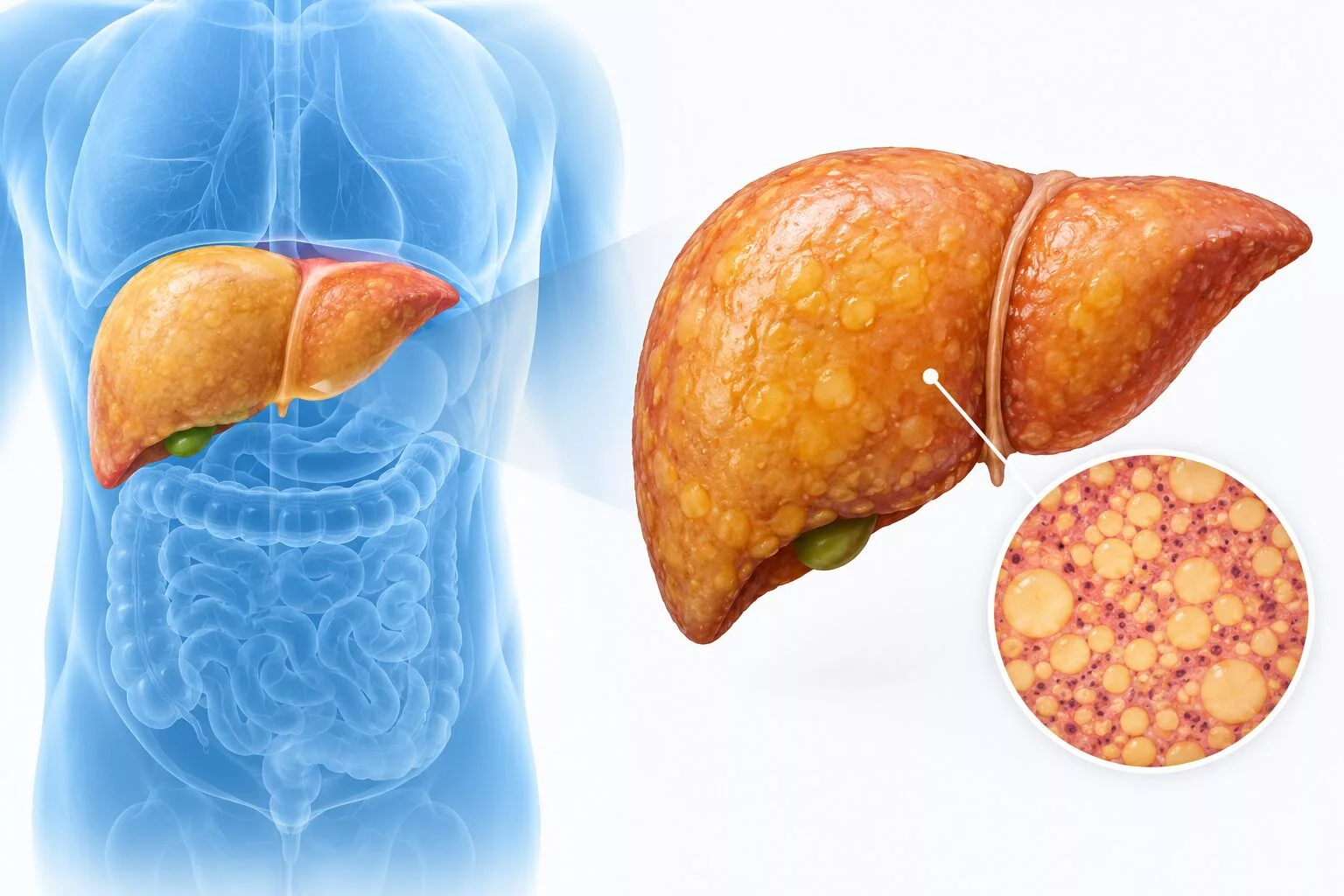
Many people learn about their liver health by chance. An ultrasound done for another reason shows fatty liver grade 2 and worry begins.
The good news is that this stage is treatable. With the right steps, your liver can heal itself.
This guide explains what the condition means, what causes it, and how to treat it. Everything is in simple language.
Fatty liver disease happens when too much fat builds up inside liver cells. A healthy liver holds very little fat.
Doctors grade the condition on an ultrasound scan:
So fatty liver grade 2 is the middle stage. The liver holds a moderate amount of fat, roughly a third to two-thirds of its cells.
Compared with grade 1 fatty liver, the liver looks brighter on the scan. Blood vessels inside it also appear less clear.
Doctors now often call this condition MASLD, short for metabolic dysfunction-associated steatotic liver disease. It was earlier known as NAFLD.
Most people feel fine at this stage. That is why the problem stays hidden for years.
Still, fatty liver symptoms can appear in some people. They are usually mild and easy to blame on stress or age.
Silent Signs of Fatty Liver Grade 2
Watch for these common symptoms of fatty liver:
These signs do not prove the condition on their own. A doctor’s check is needed.
See a doctor at once if you notice:
These may point to advanced liver damage.
Fatty liver causes are often linked to how we eat and live. The liver stores extra sugar and fat when the body cannot use them.
Over time, this storage overwhelms the liver.
Lifestyle Triggers of Fatty Liver Grade 2
Common triggers include:
Medical Conditions Linked to Fatty Liver Grade 2
Some health problems raise the risk:
Family history also plays a role. Indians tend to store fat around the belly, which raises the risk even at a normal body weight.
Diagnosis usually starts with an abdominal ultrasound. It shows the grade of fat in the liver.
Your doctor may also advise:
FibroScan is important because scarring decides how serious the case is. A biopsy is needed only in rare situations.
There is no single pill that fixes the problem. Treatment focuses on lifestyle change and control of related conditions.
The earlier you start, the better the results.
Weight Loss and Exercise for Fatty Liver Grade 2
Losing 7–10% of body weight can reduce liver fat and inflammation. Go slowly, at about 0.5 to 1 kg per week.
Aim for 150 minutes of exercise every week. Brisk walking, cycling, swimming, and yoga all help. Add strength training twice a week.
Even if you do not lose much weight, regular exercise still lowers liver fat.
Medicines and Medical Care for Fatty Liver Grade 2
Doctors first treat diabetes, cholesterol, and blood pressure. Good control of these protects the liver.
In some cases, specific medicines are advised, especially when scarring is present. Never start supplements or herbal remedies without medical advice. Some of them can harm the liver.
A fatty liver diet does not need to be complicated. Focus on whole, home-cooked food.
Eat more of:
Avoid or limit:
Here is a simple day. Have oats or vegetable poha for breakfast. Eat roti with dal and sabzi at lunch. Snack on fruit and nuts. Finish with khichdi or a salad with grilled protein at dinner.
Small changes done daily matter more than strict plans that fail.
Yes, in most cases. With steady effort, the condition can improve to grade 1 or even a normal liver.
Many people see progress in three to six months. A repeat ultrasound and blood tests show the change.
The key is consistency. If old habits return, the fat can return too.
Left untreated, the condition can advance. Fat causes inflammation, and inflammation causes scarring.
These fatty liver problems can include:
It also raises the risk of heart disease. That is why early action matters.
Track your progress with your doctor. Regular follow-ups catch problems early.
Fatty liver grade 2 is a warning, not a life sentence. Your liver has a strong power to repair itself.
Fix your diet, move more, control your sugar, and follow up regularly. If you notice any warning signs, consult a gastroenterologist or hepatologist.
