
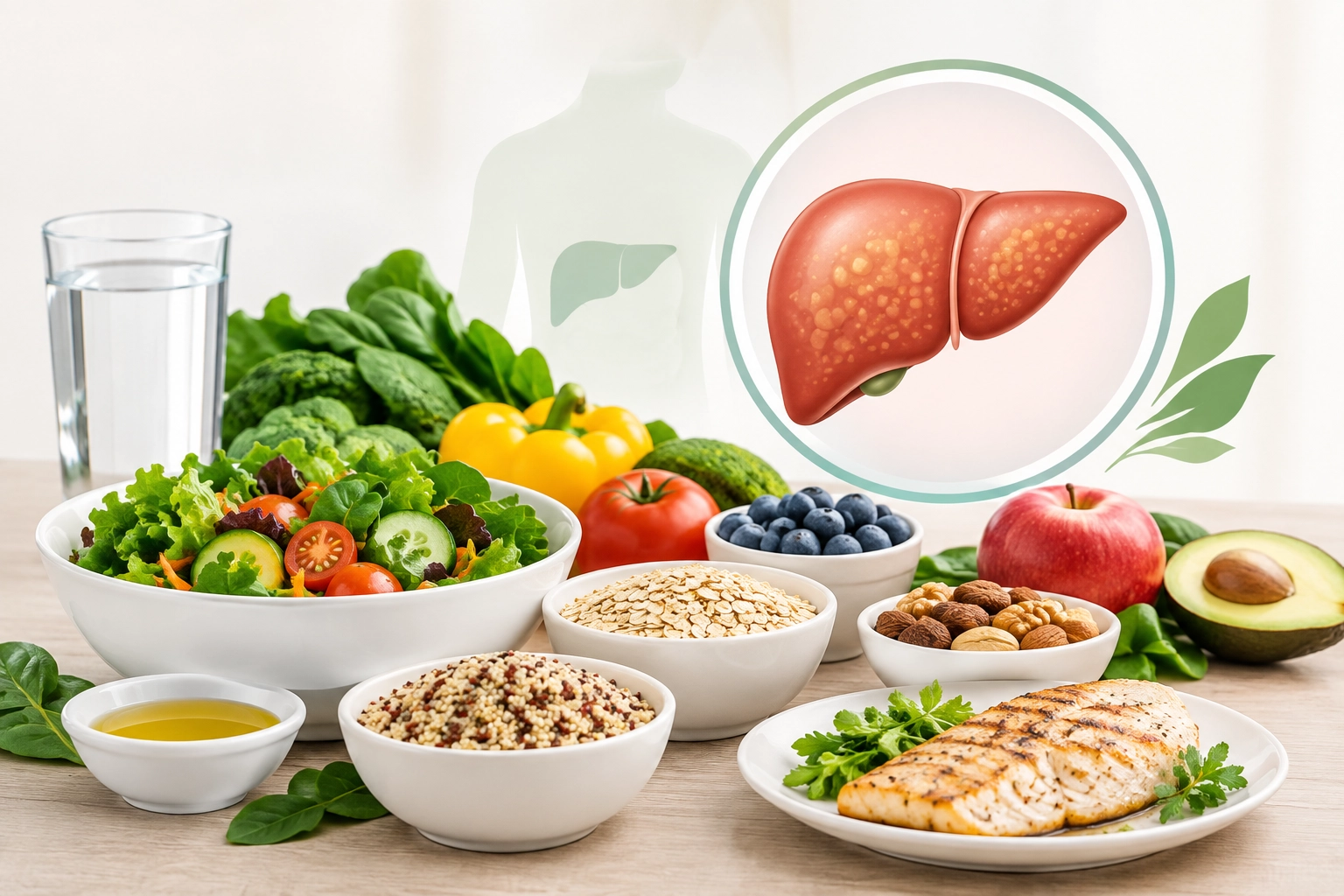
A routine ultrasound often reveals it first. The report says grade 1 fatty liver and suddenly you have many questions.
The good news is that this stage is mild and highly reversible. Food is the most powerful tool you have.
This guide explains what to eat, what to avoid, and how to build a simple daily plan. Everything is in easy language.
Fatty liver disease means extra fat has built up inside liver cells. A healthy liver holds very little fat.
In grade 1 fatty liver, fat fills about 5–33% of liver cells. Doctors call this the mild stage.
Ultrasound reports rate the condition from grade 1 to grade 3. Fatty liver grade 2 means moderate fat buildup and needs stronger action.
Catching the problem early gives you the best chance of full recovery.
Doctors now often use the term MASLD for this condition. It was earlier called NAFLD.
Most people feel nothing at this stage. Fatty liver symptoms are rare, which is why the condition stays hidden for years.
When the symptoms of fatty liver do show up, they are mild. You may notice:
These signs are easy to blame on stress or age. So regular screening matters.
If you have diabetes, belly fat, or high cholesterol, ask your doctor about an ultrasound.
Fatty liver causes are mostly linked to daily habits. The liver stores extra sugar and fat when the body cannot burn them.
Common triggers include:
Some medical conditions raise the risk too. These include type 2 diabetes, PCOS, high triglycerides, and an underactive thyroid.
Indians tend to store fat around the belly, even at a normal weight. So thin people can get fatty liver too.
There is no magic pill at this stage. Food and movement are the main treatment.
Diet is the first-line treatment for grade 1 fatty liver. A smart fatty liver diet lowers liver fat, improves insulin response, and supports weight loss.
Losing just 5–7% of body weight can reduce liver fat. Losing more brings even better results.
Ignoring the problem is risky. Untreated fatty liver problems can grow into inflammation, scarring, and even cirrhosis.
The best approach is simple. Choose whole, fresh, home-cooked food.
Vegetables and Fruits for Grade 1 Fatty Liver
Vegetables are rich in fibre and antioxidants. They help the liver clear fat.
Good choices include:
Eat fruit whole instead of drinking juice. Juice removes the fibre and adds sugar.
Swap refined grains for whole grains. They release sugar slowly and keep you full.
Try these:
Fatty fish like salmon and sardines are rich in omega-3, which helps reduce liver fat.
Healthy Fats and Drinks for Grade 1 Fatty Liver
Not all fats are bad. The right ones protect your liver.
Coffee has shown liver-protective effects in several studies. Keep it sugar-free.
You do not need to give up everything. But some foods work directly against your liver.
Sugar and Refined Carbs: Grade 1 Fatty Liver Triggers
Sugar is the biggest enemy. The liver turns excess sugar, especially fructose, into fat.
Cut back on:
Read labels carefully. Many “healthy” snacks hide added sugar.
Fats, Alcohol and Salt: Limits for Grade 1 Fatty Liver
Some fats and drinks put a heavy load on the liver.
Limit or avoid:
Alcohol deserves special mention. Even small amounts can worsen liver fat. Doctors usually advise quitting completely.
Here is a simple one-day plan. Adjust portions to your needs and doctor’s advice.
Meal | Sample Food |
Early morning | Warm water with lemon, or green tea |
Breakfast | Vegetable oats, poha, or besan chilla with chutney |
Mid-morning | An apple or papaya, plus 5–6 almonds |
Lunch | 2 multigrain rotis, dal, green sabzi, salad, and curd |
Evening | Roasted chana with green tea or black coffee |
Dinner | Vegetable khichdi or soup with grilled paneer or fish |
Eat slowly and stop when you are 80% full. Try to finish dinner two to three hours before bed.
Small, steady changes work better than a strict plan you cannot follow.
Diet works best with healthy habits. Add these to your routine:
Even if the scale does not move much, regular exercise still lowers liver fat.
Yes, in most cases. This is the best news about the mild stage.
Many people see improvement in three to six months. A repeat ultrasound and blood tests can confirm progress.
The key is consistency. If old habits return, the fat can return too.
Do not wait for symptoms to appear. A doctor can check your liver with blood tests and an ultrasound.
Visit a doctor at once if you notice yellow eyes or skin, swelling in the legs or belly, dark urine, or severe stomach pain.
If grade 1 fatty liver is ignored, it can slowly progress to higher grades. Regular check-ups every six to twelve months keep you on track.
Never take herbal supplements or “liver detox” products without medical advice. Some can harm the liver.
