
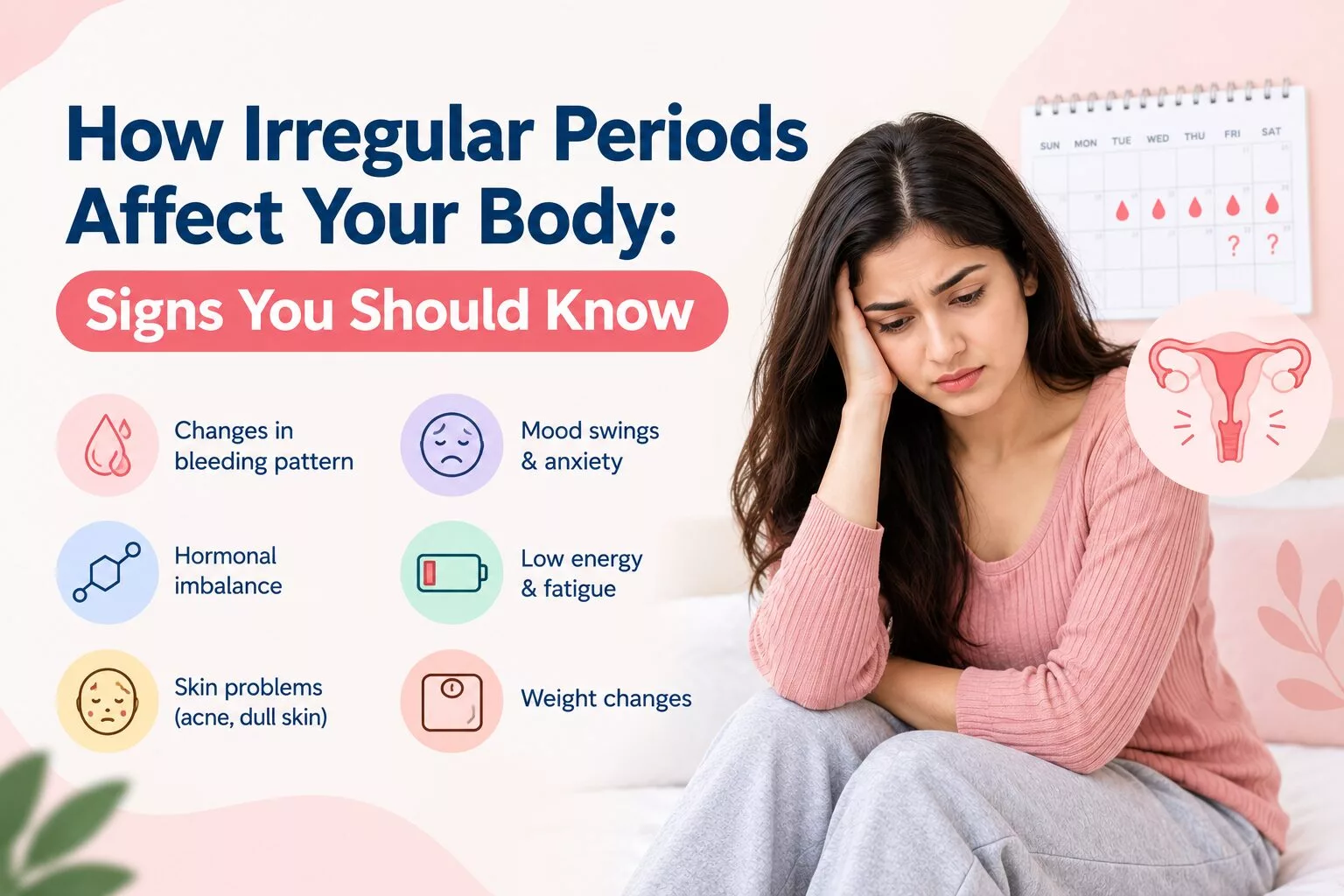
Your period isn’t just a monthly thing you deal with and forget. It’s actually your body’s way of telling you how things are going on the inside. So when your cycle starts acting weird coming late, skipping altogether, or showing up way too often it’s not something to just shrug off. Knowing the effects of irregular periods on body health can help you spot problems early, protect your chances of having kids one day, and avoid bigger issues down the road. In this blog, we’ll talk about why periods go irregular, what signs to watch for, and how the effects of irregular periods on body function show up in everyday life explained in plain, simple words.
If your periods keep jumping around outside that range, or the pattern just never stays the same, that’s called an irregular menstrual cycle.
Here’s what irregular periods can look like:
Now, one messed-up cycle here and there isn’t a big deal: stress, a cold, or a long trip can throw things off for a bit. But when period problems keep happening again and again, that’s when you should start paying closer attention to how it’s affecting your body.
Your period runs on two main hormones estrogen and progesterone. If anything disturbs their balance (like puberty, getting closer to menopause, or a condition called PCOS), it can lead to irregular menstruation.
Your thyroid gland controls a lot more than you’d think including your period. Both an underactive and overactive thyroid are common reasons for irregular periods.
When you’re constantly stressed, your body pumps out more cortisol (the stress hormone), and that can mess with ovulation. This is one of the most common irregular periods symptoms in people juggling busy or stressful lives.
Losing too much weight quickly, or gaining a lot, both count as real reasons for irregular periods because your body fat levels directly affect hormone production.
Things like fibroids or endometriosis are also common menstrual disorders that can throw your cycle off track.
Here’s the thing, the effects of irregular periods on body health aren’t limited to just your uterus. Since your cycle is tied to your hormones, and hormones touch almost every part of your body, an irregular cycle can quietly affect a lot more than you’d expect.
It Can Affect Your Fertility
One of the biggest effects of irregular periods on body reproductive health is unpredictable ovulation, sometimes it barely happens at all. This can make it harder to get pregnant when you’re ready to.
It Can Weaken Your Bones
Over time, hormonal imbalance, especially low estrogen, can slowly weaken your bones, putting you at higher risk of thin, fragile bones (osteoporosis) later in life.
It Can Show Up on Your Skin and Hair
Notice more acne, oily skin, or unwanted facial hair along with irregular periods? That’s usually linked to higher androgen (a “male” hormone) levels, often seen with PCOS.
It Can Affect Your Mood
Ever feel extra moody, anxious, or on edge when your cycle is off? That’s because estrogen and progesterone play a big role in your brain chemistry too, so irregular menstrual cycles can genuinely mess with your mood.
It Can Mess with Your Metabolism
Irregular periods, especially the ones linked to PCOS or thyroid issues, are connected to insulin resistance which over time raises your risk of type 2 diabetes.
It Can Affect Your Heart Health
Some research shows that people with long-term irregular cycles may have a slightly higher risk of heart-related issues later on, likely tied to the hormonal and metabolic changes happening underneath.
Catching irregular periods symptoms early makes everything easier to manage. Watch out for:
Book an appointment with a gynecologist if you notice:
Getting menstrual disorders checked early usually means simpler, faster treatment.
Doctors usually start with a basic physical exam, some hormone blood tests, a thyroid check, and sometimes a pelvic ultrasound to figure out the exact causes of irregular periods. Once they know the reason, treatment might include:
This blog is based on well-established medical guidance from gynecology and hormone health experts, explaining in simple terms how your hormones, thyroid, and metabolism are all connected to your menstrual cycle. Doctors widely agree that a period that’s irregular for months isn’t something to brush off it’s your body sending a signal. That said, this article is meant to guide and inform you, not replace a real conversation with your doctor. If your periods have been irregular for a while, please talk to a healthcare provider who can look at your specific situation and guide you properly.
