
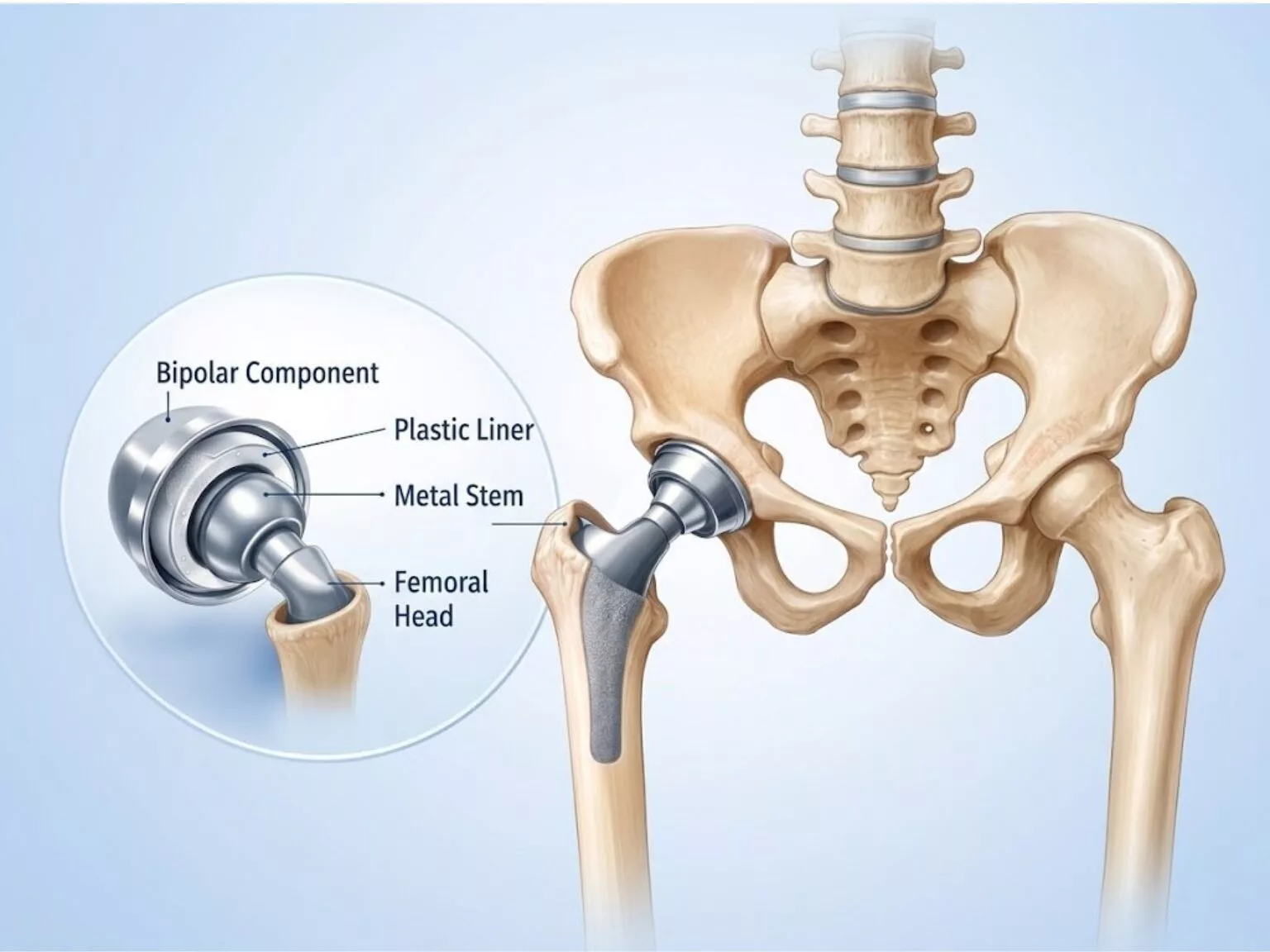
Hip fractures and severe hip joint damage are common problems, especially in older adults. When pain becomes severe and walking becomes difficult, doctors may
recommend bipolar hip surgery. Many patients and families ask one important question: Is bipolar hip surgery safe?
bipolar hip surgery is generally considered a safe and effective procedure when performed by an experienced orthopedic surgeon on the right patient. It is commonly used for elderly patients with hip fractures, damaged hip joints, or reduced mobility.
In this detailed guide, you will learn about safety, risks, success rate, recovery, results, and when this procedure may be the right option.
Bipolar hip surgery is a type of partial hip replacement procedure. In this surgery, the damaged femoral head (ball part of the hip joint) is replaced with an artificial implant. The implant has two moving surfaces, which helps reduce friction and improve movement.
Unlike total hip replacement surgery, bipolar surgery usually keeps the natural hip socket if it is healthy.
This surgery is commonly recommended for:
● Neck of femur fracture
● Hip fractures in elderly patients
● Painful damaged hip joint
● Limited walking ability
● Cases where full hip joint replacement may not be necessary
Yes, bipolar hip surgery is considered safe in most patients. It has been performed worldwide for many years and gives good results, especially in older adults with fractures.
Safety depends on several factors:
● Patient age and health condition
● Bone quality
● Presence of diabetes or heart disease
● Surgeon experience
● Hospital care quality
● Post-surgery rehabilitation
When proper planning and aftercare are followed, most patients recover well and return to walking.
Doctors may recommend bipolar hip surgery for patients with:
A broken hip bone, especially fracture neck femur, is the most common reason.
If walking, standing, or sitting causes constant pain.
When the ball of the hip joint cannot be repaired.
When the ball of the hip joint cannot be repaired.
When a patient cannot walk independently due to injury.
The procedure is usually done under spinal or general anesthesia.
1. Small incision near hip
2. Damaged femoral head removed
3. Artificial implant inserted
4. Joint alignment checked
5. Wound closed carefully
The surgery usually takes 1 to 2 hours depending on condition.
Bipolar hip surgery offers many benefits:
● Fast pain relief
● Better mobility
● Earlier walking after fracture
● Reduced bed rest complications
● Improved independence
● Better quality of life
● Less friction due to dual
movement implant For many elderly patients, this surgery can be life-changing.
Like any surgery, bipolar hip surgery has some risks. However, most complications are uncommon when surgery is done properly.
May happen around wound or implant.
Can form in legs after surgery.
Artificial joint may move out of position.
Rare over time.
Minor differences can occur.
Temporary issues related to anesthesia.
Rare but possible in weak bones.
Doctors reduce these risks through medication, precautions, and rehabilitation.
The success rate of bipolar hip surgery is generally high.
Most patients experience:
● Reduced pain
● Improved walking ability
● Better balance
● Ability to sit and stand comfortably
● Return to daily activities
Success depends heavily on:
● Correct patient selection
● Timely surgery after fracture
● Good physiotherapy
● Proper nutrition
● Follow-up care
Many elderly patients walk again within weeks after surgery.
Patients often compare bipolar hip surgery with total hip replacement surgery.
| Feature | Bipolar Hip Surgery | Total Hip Replacement Surgery |
|---|---|---|
| Socket Replaced | No | Yes |
| Ball Replaced | Yes | Yes |
| Common Use | Hip fracture (elderly) | Severe arthritis |
| Surgery Time | Usually shorter | Longer |
| Recovery | Often faster | Good but longer |
If the socket is healthy, bipolar surgery may be enough. If both sides of the joint are damaged, total hip replacement may be better.
Recovery varies from patient to patient.
Typical Timeline:
● Standing with support
● Pain control
● Start walking with walker
● Better walking
● Home exercises
● Improved movement
● More independence
● Reduced support devices
● Stronger mobility
● Better confidence walking
Most patients get positive results after bipolar hip surgery.
Expected improvements:
● Less pain
● Easier walking
● Better sleep
● Independence in bathroom use
● Improved sitting and standing
● Lower risk of bed rest complications
For elderly fracture patients, surgery often helps them regain daily life faster.
Many people also ask about hip replacement surgery cost. Cost depends on:
● City and hospital type
● Surgeon expertise
● Implant brand
● ICU or room category
● Medical tests
● Length of stay
● Physiotherapy needs
Bipolar surgery may cost less than total hip replacement surgery in some cases.
Daily exercise improves strength.
Prevent falls during healing.
Supports tissue repair.
Important for pain and clot prevention.
Protect new joint position.
Regular X-rays and doctor review help.
Seek medical help if you notice:
● Fever
● Redness near wound
● Severe swelling
● Sudden hip pain
● Difficulty walking suddenly
● Chest pain
● Breathlessness
● Leg swelling
These may need urgent attention.
Many patients call this procedure hip ball replacement because the femoral head is replaced. In many fracture cases, yes, it is an excellent option because it restores movement quickly and reduces pain.
Some patients may need other options if they have:
● Severe socket arthritis
● Active infection
● Advanced bone destruction
● Neurological instability
● Younger active patients needing full joint replacement
In such cases, doctors may recommend total hip replacement or another form of hip surgery.
Many patients live active lives after surgery. They can often:
● Walk independently
● Use stairs carefully
● Travel short distances
● Perform household activities
● Enjoy less pain daily life
Long-term results improve with weight control, exercise, and fall prevention.
Yes, bipolar hip surgery is a safe and trusted treatment for many elderly patients with hip fractures and painful joint damage. It has a high success rate, gives strong pain relief, and helps restore mobility. While every surgery has risks, choosing an experienced orthopedic surgeon and following rehabilitation advice significantly improves outcomes.
If you or a family member has a hip fracture, timely orthopedic consultation is important.
